Ultrabooks Ranked By Battery Life and Portability
Laptops
By Ethan Walker


Which laptop disappears in your bag but still survives a full workday without begging for a charger. That’s the real test, especially how nanotechnology was able to make the components slimmer without giving up performance. Not raw power. Not flashy specs. Just endurance and weight, because the best ultrabook is the one you forget you’re even carrying until you open it.
In this head-to-head, we’re putting three of the most relevant flagship ultrabooks against each other: the MacBook Air M5, the Dell XPS 13 (2026 refresh), and the ASUS Zenbook S 14 OLED. Each one claims to balance performance, portability, and battery life, but only one truly nails the formula.
Quick Comparison Table: Battery Life vs Portability
Laptop | Weight | Claimed Battery Life | Starting Price (USD) | Best Strength |
|---|---|---|---|---|
Apple MacBook Air M5 | 1.24 kg | Up to 18–20 hrs | $1,099.00 | Efficiency + silence |
Dell XPS 13 (2026) | 1.19 kg | Up to 14–16 hrs | $1,199.00 | Compact premium design |
ASUS Zenbook S 14 OLED | 1.20 kg | Up to 15–17 hrs | $1,299.00 | OLED display + balance |
Apple MacBook Air M5: The Battery King Disguised as a Feather
Standout Feature
Silicon efficiency + fanless design = silent all-day machine
Pros & Cons
Pros
Excellent real-world battery life
Silent operation (no fan)
Strong performance-per-watt
Lightweight and travel-friendly
Cons
Limited ports
Not ideal for heavy 3D workloads
Premium upgrades get expensive fast
Detailed Review
Image: Apple
This is the laptop you take on a flight and forget to charge for a full day and a half. Apple continues to dominate efficiency tuning, and the M5 only widens that gap. While competitors chase performance numbers, Apple is still refining endurance.
The biggest win here isn’t just battery life,it’s consistency. Whether you’re editing documents, running Chrome tabs, or light creative work, the drain curve is smooth and predictable.
Dell XPS 13 (9350): The Minimalist Power Commuter
Standout Feature
Ultra-compact footprint with near-borderless display
Pros & Cons
Pros
Extremely portable
Premium build quality
Great keyboard and trackpad
Strong productivity performance
Cons
Battery life lags behind Apple
Limited thermal headroom
Fewer ports than competitors
Detailed Review
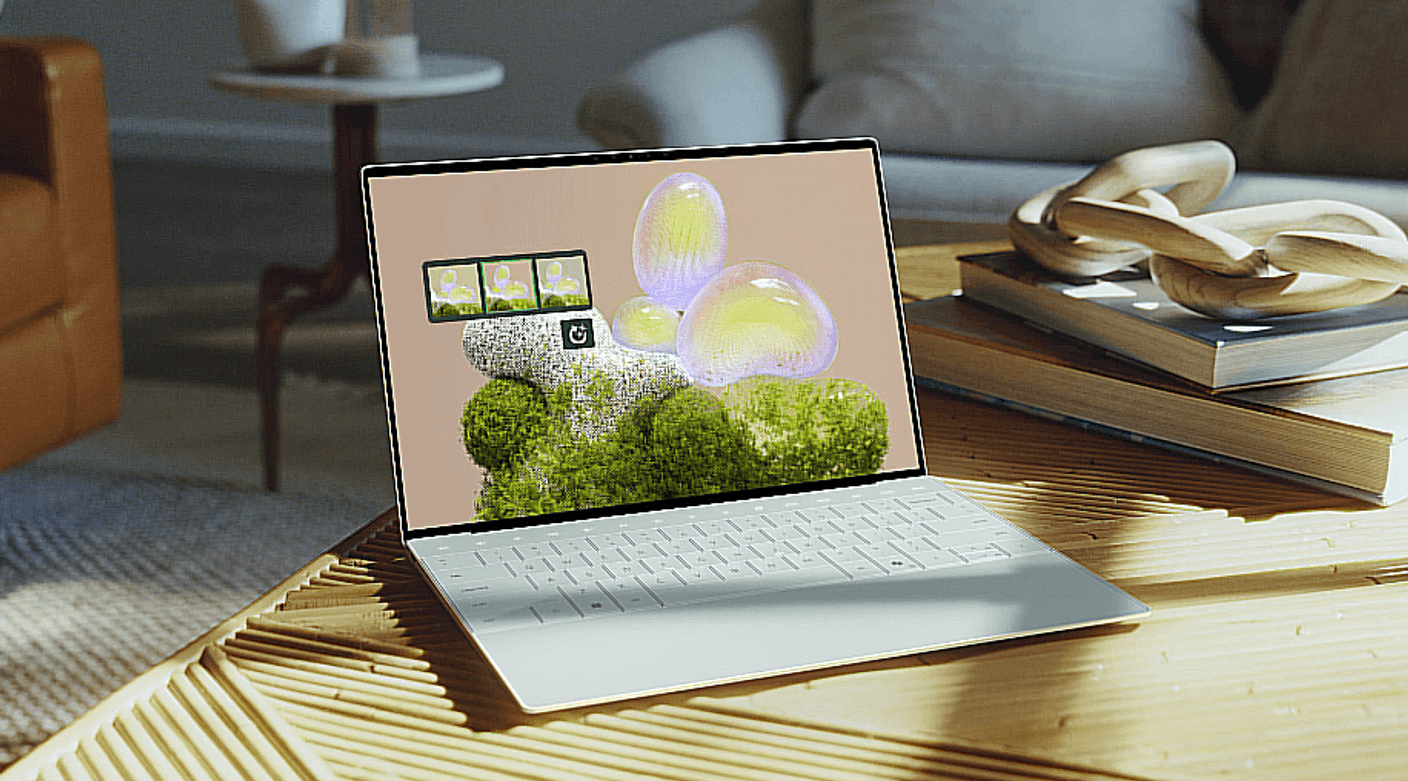
Image: Dell
The XPS 13 feels like it was engineered for people who move constantly, coffee shops, offices, airports. It’s lighter than the MacBook Air by a hair, but that doesn’t automatically translate to better endurance.
Where it shines is refinement. Dell’s design language is still one of the cleanest in Windows laptops. However, battery efficiency still trails Apple’s silicon advantage, especially under sustained workloads.


ASUS Zenbook S 14 OLED: The Display Champion With Real Balance
Standout Feature
OLED display in a lightweight chassis without killing battery life
Pros & Cons
Pros
Best display in this lineup
Strong all-day battery performance
Good port selection
Balanced performance
Cons
Slightly heavier than rivals in real use
OLED can drain faster at high brightness
Not as optimized as Apple silicon
Detailed Review

Image: Asus
ASUS doesn’t try to win the efficiency war outright, it plays the balance game. The OLED panel is gorgeous, arguably the best visual experience here, but it comes with a slight trade-off in battery consistency.
Still, for users who prioritize media consumption, design work, or color accuracy, this is the most visually rewarding ultrabook in the lineup.
Head-to-Head: Who Actually Wins?
Battery Life
MacBook Air M5: undisputed leader
Zenbook S 14 OLED: strong, slightly variable
XPS 13: efficient but behind Apple
Portability
XPS 13: smallest footprint
Zenbook S 14 OLED: light but slightly larger
MacBook Air M5: marginally heavier but still ultra-portable
Overall Balance
MacBook Air M5: best endurance
XPS 13: best compact design
Zenbook S 14 OLED: best display + balance
Final Verdict: The Smart Choice Depends on What You Value Most
If this is purely about ultrabooks ranked by battery life and portability, the winner is clear:
🏆 MacBook Air M5 takes the crown.
It’s not the lightest. It’s not the flashiest. But it consistently delivers the best battery life without compromising portability or performance stability.
However:
Choose the XPS 13 if absolute compactness is your priority
Choose the Zenbook S 14 OLED if display quality matters as much as mobility
In 2026, ultrabooks are less about compromises and more about preferences. But if you want the safest all-day bet, Apple still sets the pace, and everyone else is trying to catch up.
If you want more options, either if you’re a student or someone who's looking for a good value laptop, check out Best Laptops for Students in 2026: Value Picks Tested article.

Ethan Walker
Consumer Tech & Mobile Writer
Ethan's love for technology started with building PCs and experimenting with gadgets at a young age. Today, he covers consumer tech, smartphones, and emerging innovations, helping readers understand what products are actually worth their attention.