Smart Thermostats: Do They Really Save Money
Smart Home
By Oliver Hayes
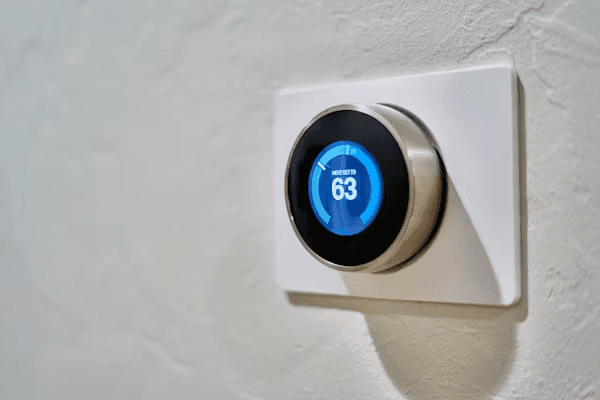
Image: Unsplash
When devices like Nest, Ecobee, and Amazon Smart Thermostat become mainstream while the energy prices climb up, homeowners ask if having smart thermostats do really save money. Or rather, they’re just another shiny smart home upgrade that feels more useful than it actually is?
This analysis breaks down where the savings come from, what the data really says, and whether upgrading your HVAC control is actually worth it in 2026.
How Smart Thermostats Actually Save Money (and When They Don’t)
At their core, smart thermostats optimize heating and cooling schedules to reduce wasted energy. But the magic isn’t in the hardware, it’s in behavior automation.
Learning algorithms and adaptive scheduling
Devices like the Google Nest Learning Thermostat track your habits over time. Leave at 8 AM every weekday? It learns that. Forget to turn off the AC? It stops you from paying for it.
But if your routine is chaotic, the “learning” becomes less predictive and more reactive. Savings drop.
Geofencing and occupancy detection
The ecobee Smart Thermostat Premium leans heavily on occupancy sensors and phone-based geofencing. In theory, it turns off HVAC systems when nobody’s home.
In practice, this works best in households where everyone carries a smartphone while enabling location permissions. Otherwise, it’s just a feature sitting in the background doing nothing.
Real-World Energy Savings: What the Data Actually Shows
Manufacturers love quoting big numbers like “up to 23% savings,” but real-world results are more nuanced.
Utility studies and independent findings
Across multiple utility programs in North America and Europe, average savings tend to land between:
Heating: 10%–12% reduction
Cooling: 8%–10% reduction
That’s meaningful, but not life-changing. On a $200 monthly energy bill, you’re looking at roughly $16–$24 saved per month in ideal conditions.
Behavior matters more than the device
A recurring pattern in studies: users who manually override schedules often erase most of the savings. Smart thermostats are only “smart” when you stop micromanaging them.
Best Smart Thermostats in 2026 (Worth Your Money)
Not all smart thermostats are built the same. Some prioritize automation, others focus on compatibility or affordability.
Google Nest Learning Thermostat
Price: $239.99
The Google Nest Learning Thermostat remains the most polished “set it and forget it” option. Best for users who want minimal interaction and solid AI-driven scheduling.
Best for: users who want automation without thinking about it.
Ecobee Smart Thermostat Premium
Price: $259.99
The ecobee Smart Thermostat Premium is arguably the most feature-rich. It doubles as a home air quality monitor and smart speaker hub. Great value if you’re already in a smart home ecosystem.
Best for: multi-room homes and smart home enthusiasts.
Amazon Smart Thermostat
Price: $79.99
The Amazon Smart Thermostat is the budget disruptor. It strips features down to essentials but keeps core scheduling intelligence via Alexa.
Best for: simple upgrades from traditional thermostats.


Honeywell Home T9
Price: $209.99
The Honeywell Home T9 Smart Thermostat focuses on multi-room sensor control, making it ideal for larger homes with uneven heating or cooling.
Best for: larger homes with inconsistent temperature zones.
Where Smart Thermostats Fail (and Why People Get Disappointed)
Installation and HVAC compatibility
Not every home is plug-and-play. Older HVAC systems may require a C-wire or professional installation, adding $80 to $250 upfront costs.
Subscription fatigue and ecosystem lock-in
Some advanced features, like detailed energy reports or remote sensor analytics, can be tied to ecosystems or apps that constantly nudge you deeper into their platform.
The biggest hidden cost: unrealistic expectations
People expect instant bill cuts. Instead, savings are gradual and dependent on behavior. That mismatch is why many users label smart thermostats as “underwhelming.”
Verdict: Are Smart Thermostats Worth It?
So, smart thermostats: do they really save money? Yes, but not dramatically, and not automatically.
If you’re upgrading from a basic programmable thermostat, expect moderate savings and better convenience. If you already carefully manage your heating and cooling, the financial gains shrink fast.
Smart thermostats aren’t a money-saving miracle. They’re a discipline-saving tool. And in modern households, that might be just as valuable. In other words, they won’t fix your energy bill, but they will stop you from accidentally making it worse.
For more related articles, check out the Smart Homes page.

Oliver Hayes
Gadgets & Smart Home Writer
Oliver began writing about gaming and digital culture before moving into the world of consumer technology. He specializes in gadgets, smart home devices, and practical tech advice that helps readers make smarter buying decisions.