Spatial Audio Explained: Does It Actually Improve Listening
Audio
By Marwin Jaino Cervañez
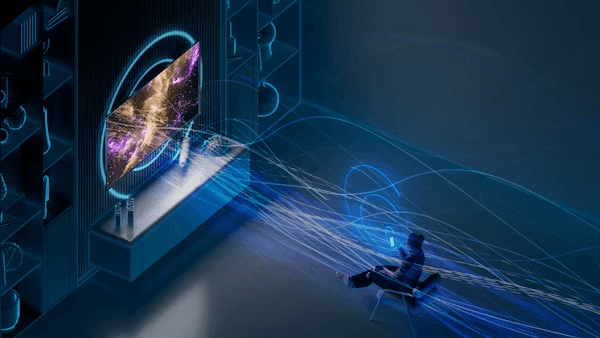
Spatial audio is one of those audio features that sounds futuristic in marketing materials but often leaves people wondering whether it actually makes music, movies, and games sound better. You'll find it on everything from premium earbuds and headphones to smartphones, tablets, TVs, and streaming services.
The short answer? Spatial audio can absolutely improve listening, but only in specific situations. It's not a magic upgrade for every song or every listener.
In this guide, we'll explain what spatial audio is, how it works, where it shines, and whether it's worth enabling on your favorite devices.
What Is Spatial Audio?
Spatial audio is an audio technology designed to make sound feel like it's coming from different locations around you rather than from two speakers positioned beside your ears.
Traditional stereo audio uses left and right channels. Spatial audio expands that concept by creating a three-dimensional sound field that can simulate sounds coming from in front of you, behind, above, and around you.
The goal isn't necessarily to make audio louder or clearer. Instead, it's about creating a stronger sense of immersion and realism.
Think of the difference between watching a movie on a flat TV speaker versus sitting in a theater with surround sound. Spatial audio tries to recreate some of that experience through headphones or earbuds.
How Spatial Audio Works
Virtual Surround Sound
Most spatial audio systems use advanced audio processing algorithms to trick your brain into perceiving sounds as if they're positioned in physical space.
Instead of simply sending audio to the left or right ear, the software modifies timing, frequency response, and directional cues.
Your brain naturally interprets these tiny differences as location information.
Object-Based Audio
Modern spatial audio formats often use object-based audio rather than traditional channel-based audio.
In a standard stereo track, sounds are assigned to left and right channels.
With object-based audio, individual sounds can be treated as separate audio objects that exist in a virtual 3D environment.
For example:
Dialogue can stay centered
A helicopter can move overhead
Rain can appear to fall from above
Background effects can surround the listener
This creates a more convincing soundstage than conventional stereo audio.
Head Tracking Technology
Some premium headphones and earbuds include dynamic head tracking.
This feature uses motion sensors to detect head movement.
If you're watching a movie and turn your head slightly, the audio remains anchored to the screen instead of moving with your ears.
It's a surprisingly effective illusion when implemented properly and can make content feel more natural.
The Different Types of Spatial Audio
Dolby Atmos
Dolby Atmos is currently the most recognizable spatial audio format.
It's widely used across:
Streaming services
Smartphones
TVs
Soundbars
Home theater systems
Gaming platforms
Dolby Atmos supports object-based audio and is often considered the gold standard for immersive entertainment audio.
Apple's Spatial Audio
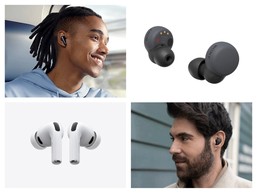
Apple popularized spatial audio for mainstream consumers through AirPods and compatible Apple devices.
Apple combines Dolby Atmos content with head-tracking technology to create a highly immersive listening experience.
For movies and TV shows, it's one of the most polished implementations currently available.
Sony 360 Reality Audio
Sony takes a music-focused approach with 360 Reality Audio.
The format is designed to place instruments and vocals around the listener in a virtual space, creating a more concert-like experience.
Adoption remains more limited than Dolby Atmos, but supported content can sound impressive.
Does Spatial Audio Make Music Sound Better?
This is where opinions start to diverge.
When It Works Well
Spatial audio tends to perform best when:
The track was specifically mixed for immersive audio
The production contains many layers and instruments
The listener uses quality headphones
The streaming service provides a high-quality spatial mix
Genres that often benefit include:
Orchestral music
Film scores
Jazz
Progressive rock
Electronic music
Live recordings
These genres naturally take advantage of the larger virtual soundstage.
When It Doesn't Help
Not every song benefits from spatial processing.
In some cases, spatial audio can:
Reduce vocal focus
Alter the original mix
Make instruments sound distant
Introduce an artificial presentation
Many audiophiles still prefer the original stereo mix because it's usually the version approved by the artist and producer.
For casual music listening, the improvement can range from dramatic to barely noticeable depending on the track.
Why Spatial Audio Is More Useful for Movies
Movies and TV shows are arguably where spatial audio delivers the biggest benefit.
Film sound design already relies heavily on positioning sounds in space.
When spatial audio is implemented properly, viewers can more easily perceive:
Directional dialogue
Environmental effects
Action sequences
Atmospheric details
A good Dolby Atmos mix can make headphones feel significantly larger than they actually are.
For frequent movie watchers, spatial audio is often one of the most worthwhile premium audio features available today.


What About Gaming?
Gaming is another area where spatial audio makes a strong case for itself.
Competitive players often rely on directional sound cues to identify:
Enemy footsteps
Gunfire locations
Vehicle movement
Environmental activity
These are also reliable when playing survival horror.
Spatial audio can improve positional awareness and immersion.
Many modern games are specifically designed with 3D audio technologies in mind, making the feature more than just a marketing checkbox.
Does Spatial Audio Require Special Headphones?
Not always.
Many spatial audio solutions work with standard headphones.
However, premium headphones and earbuds often provide:
Better head tracking
More accurate imaging
Improved processing
Lower latency
The quality of the implementation matters far more than the marketing label.
A well-tuned pair of stereo headphones can sometimes sound better than poorly implemented spatial audio.
That's why we always recommend focusing on overall sound quality first before treating spatial audio as a deciding factor.
The Downsides of Spatial Audio
Despite the hype, spatial audio isn't perfect due to inevitable compromises.
Battery Drain
Head tracking and advanced audio processing can increase power consumption.
Wireless earbuds may experience shorter battery life when these features are enabled.
Inconsistent Content
Not all music, movies, or games support spatial audio.
The experience varies significantly between platforms and services.
Mixed Music Results
Some spatial mixes sound incredible.
Others feel artificial and less engaging than traditional stereo versions.
Consistency remains one of the biggest challenges facing immersive audio.
So, Does Spatial Audio Actually Improve Listening?
If your primary use case is watching movies, TV shows, or playing modern games, spatial audio is one of the most convincing audio upgrades introduced in recent years.
For music, the answer is less straightforward. Some tracks gain a stunning sense of depth and space, while others sound better in their original stereo form.
Our verdict at Tech Unboxed is simple: spatial audio is not a gimmick, but it's also not a universal upgrade. Think of it as a tool that works exceptionally well with the right content rather than a feature that automatically improves everything you hear.
For movie lovers and gamers, it's easy to recommend. For music listeners, it's worth experimenting with, but don't be surprised if you find yourself switching back to stereo for certain albums.
The best approach? Treat spatial audio as an option, not a requirement. When the content is mastered correctly and the hardware is up to the task, the results can be genuinely impressive.

Marwin Jaino Cervañez
Consumer Tech & Gaming Writer
Marwin started writing for a geek-news site before diving into video games. Still a geek by nature, delving into technology is inevitable. PCs, Laptops, Cellphones, Headphones, as long as he can game. Exploring low to high end models, he wants to see how far consuming tech has come for work and play.
Recent stories by Marwin Jaino Cervañez: