AI in The Home: The Smartest Devices of 2026
Smart Home
By Oliver Hayes
Smart home technology has spent years promising a future where our devices understand us, automate everyday tasks, and quietly make life easier. In 2026, that vision is finally starting to feel real. The biggest shift isn't that devices are getting smarter, it's that artificial intelligence is becoming the operating system of the modern home.
From robot vacuums that understand room layouts to security cameras that can distinguish between a package delivery and a potential threat, AI in the home has evolved beyond simple automation. The smartest devices of 2026 aren't just connected. They're proactive, adaptive, and increasingly capable of making useful decisions without constant user input.
For anyone following smart home trends, 2026 is shaping up to be the year AI stops being a feature and becomes the foundation. More importantly, many of the technologies driving this shift are already available to buy today.
The Shift From Smart Devices to Intelligent Homes
The first wave of smart home products focused on connectivity. You could turn lights on from your phone, check camera feeds remotely, or schedule your thermostat.
The second wave introduced automation through routines and integrations.
Now, we're entering the third phase: AI-powered intelligence.
Modern smart home devices can learn behavioral patterns, predict needs, and adapt to changing circumstances. Instead of programming every action manually, homeowners increasingly let AI systems make recommendations and adjustments automatically.
The difference may sound subtle, but it's transforming how people interact with technology at home.
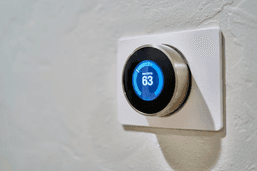
A great example is the Google Nest Learning Thermostat (4th Gen), currently available for $279.99 USD:https://store.google.com/product/nest_learning_thermostat
Unlike traditional programmable thermostats, it learns occupancy patterns, analyzes weather forecasts, and automatically adjusts temperatures to balance comfort and efficiency.
Similarly, AI-powered security systems now understand context rather than simply reacting to motion.
Smart Home Hubs Are Becoming AI Assistants
The traditional smart speaker is evolving into something much more powerful.
Voice Assistants Are Finally Getting Smarter
For years, voice assistants were limited to commands and simple questions. Now, large language models have dramatically expanded their capabilities.
Instead of saying:
"Turn on the kitchen lights."
Users can now say:
"I'm cooking dinner and need better lighting."
The AI understands intent and adjusts multiple devices accordingly.
This contextual understanding is making smart home interactions feel significantly more natural.
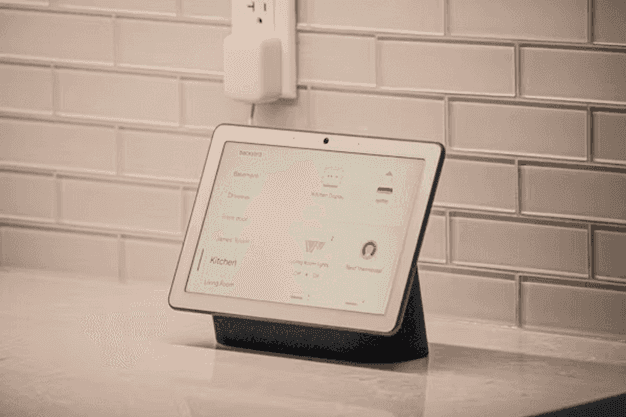
One of the strongest examples today is the Amazon Echo Show 8 (3rd Gen) for $149.99 USD:https://www.amazon.com/dp/B0BLS3Y632
Combined with Alexa's latest AI capabilities, it can manage smart home devices, answer contextual questions, create routines, and serve as a central household dashboard.
The result is a smart home experience that feels less like operating technology and more like communicating with a capable assistant.
Local AI Processing Is Improving Privacy.
Rather than sending every voice command and sensor reading to the cloud, many manufacturers now process data locally.
This approach offers:
Faster responses
Better reliability
Improved privacy
Reduced dependence on internet connectivity
For consumers concerned about smart home security, local AI processing is becoming a major selling point.
Apple's HomePod (2nd Generation), priced at $299.00 USD, remains one of the strongest examples of privacy-focused smart home control: https://www.apple.com/homepod-2nd-generation/
Robot Vacuums Are Becoming Household Managers
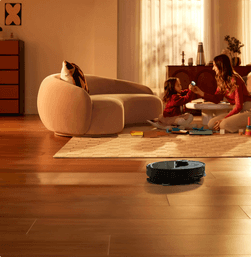
They don’t clean floors aimlessly. Its AI grew more intelligent to identify obstacles to avoid while continuing its function almost perfectly.
Smarter Navigation and Object Recognition
The best models in 2026 can identify:
Shoes
Pet waste
Power cables
Toys
Furniture changes
Household obstacles
Instead of bumping into objects and hoping for the best, these devices create detailed environmental maps and continuously update them.
Some systems even learn cleaning preferences for different rooms.
For example, the vacuum may automatically increase cleaning frequency in high-traffic areas while reducing unnecessary runs elsewhere.
The standout product here is the Roborock S8 MaxV Ultra, currently selling for $1,799.99 USD:https://us.roborock.com/products/roborock-s8-maxv-ultra
Multi-Tasking Robots Are Emerging
We're beginning to see robot vacuums evolve into broader home maintenance platforms.
New premium models can:
Vacuum
Mop
Self-clean
Detect spills
Provide home status updates
The ECOVACS DEEBOT X2 OMNI, available for approximately $1,299.99 USD, is another strong example:https://www.ecovacs.com/us/deebot-robotic-vacuum-cleaner/deebot-x2-omni
While we're still far from science-fiction household robots, the trajectory is becoming increasingly clear.
AI Security Cameras Are Getting Context-Aware
Security cameras have traditionally generated too many false alerts.
That's changing quickly.
Understanding Events Instead of Detecting Motion
The smartest cameras nowadays focus on understanding events rather than simply detecting movement.
Instead of receiving notifications saying:
"Motion detected."
Users may see alerts like:
Package delivered
Family member arrived home
Unknown person approaching front door
Vehicle stopped unusually long in driveway
This contextual awareness dramatically improves usefulness while reducing alert fatigue.
The Google Nest Cam (Battery), priced at $179.99 USD, remains one of the best examples:https://store.google.com/product/nest_cam_battery
Its AI can distinguish between people, animals, vehicles, and packages without requiring constant manual filtering.
Better Threat Detection
AI systems can now identify suspicious behavior patterns before incidents occur.
For homeowners, this means security technology is becoming more proactive and less reactive.
The goal is not simply recording events but helping prevent them.
Another standout is the Arlo Pro 5S 2K Security Camera, available for $149.99 USD:
https://www.arlo.com/en-us/cameras/pro/pro-5s.html
Smart Kitchens Are Becoming Predictive
AI integration in the kitchen has improved to help manage culinary tasks.
Refrigerators Are Learning Household Habits
Modern smart refrigerators can:
Track inventory
Suggest recipes
Monitor expiration dates
Recommend grocery purchases
The best systems don't simply display information.
They analyze household consumption patterns and make practical recommendations.
One of the most advanced options currently available is the Samsung Bespoke AI Family Hub+ Refrigerator, starting around $3,899.00 USD:
https://www.samsung.com/us/home-appliances/refrigerators/bespoke/
While not every feature feels essential yet, the underlying technology is improving rapidly.
AI Cooking Assistance Is Expanding
Smart ovens and kitchen appliances increasingly provide guided cooking experiences.
They can:
Identify food types
Recommend cooking settings
Adjust temperatures automatically
Monitor cooking progress
The June Oven Premium, available for approximately $699.00 USD, remains one of the most recognizable AI-assisted cooking appliances:
For busy households, these features reduce guesswork and improve consistency.
Health and Wellness Devices Are Moving Into the Home
There’s no home. The person living in it isn’t fully well, is it?


Passive Health Tracking
Instead of requiring wearable devices, some systems now monitor wellness through environmental sensors.
These technologies can analyze:
Sleep quality
Air quality
Room temperature
Humidity levels
Occupancy patterns
The goal is to create healthier living environments without requiring constant user interaction.
The Withings Sleep Analyzer, priced at $129.95 USD, is a strong example:
https://www.withings.com/us/en/sleep-analyzer
AI-Powered Health Ecosystems
The line between smart homes and digital health is becoming increasingly blurred.
Products that combine environmental monitoring with personal wellness insights are expected to grow significantly over the next few years.
Readers interested in health-focused consumer technology may also want to explore Tech Unboxed's coverage of wearable innovations and smart health tracking devices.
Energy Management Is Becoming Autonomous
Rising energy costs can be managed thanks to the forecasting calculations of AI.
Smart Energy Systems
The smartest homes these days don’t simply track energy usage, they actively optimize it.
AI-powered energy systems can coordinate:
HVAC operation
Appliance scheduling
Battery storage
Solar production
Electric vehicle charging
The result is improved efficiency with minimal homeowner involvement.
The ecobee Smart Thermostat Premium, currently available for $249.99 USD, remains one of the best smart energy management products:
https://www.ecobee.com/en-us/smart-thermostats/smart-thermostat-premium/
Predictive Energy Savings
Rather than reacting to high energy bills, AI systems increasingly forecast usage and recommend adjustments beforehand.
This predictive approach is likely to become a standard feature across premium smart home ecosystems.
For homeowners evaluating connected devices, Tech Unboxed's smart home buying guides offer practical advice on choosing products that deliver real-world value rather than gimmicks.
What the Smartest Homes of 2030 Might Look Like
Looking ahead, the direction is becoming easier to predict.
The smartest homes won't necessarily have more devices.
They'll have better intelligence.
Future AI systems will likely:
Understand household routines more accurately
Coordinate multiple devices automatically
Anticipate user needs
Operate with greater privacy protections
Reduce manual management almost entirely
The technology industry's focus is shifting away from adding more smart products and toward making existing products work together intelligently.
That's ultimately the promise of AI in the home.
Want to know more options for smart homes devices, then check out our Smart Home articles.
Final Thoughts
Artificial Intelligence in our homes is close to what the future is like. Their features are marketed as hype at first, but they're defined by usefulness.
Whether it's a robot vacuum that understands your home's layout, a security camera that recognizes meaningful events, or an AI assistant that manages multiple devices naturally, the best smart home products are becoming less visible and more helpful.
For consumers, that's good news.
The future of AI in the home isn't about replacing people. It's about reducing friction, automating repetitive tasks, and allowing technology to work quietly in the background.
After years of hype, smart homes are finally becoming genuinely intelligent.

Oliver Hayes
Gadgets & Smart Home Writer
Oliver began writing about gaming and digital culture before moving into the world of consumer technology. He specializes in gadgets, smart home devices, and practical tech advice that helps readers make smarter buying decisions.