The Science Behind Stress Scores on Fitness Devices
Health Tech
By Sophie Bennett

Understanding the science behind our stress scores may lead to confusion along the way. From smartwatches to dedicated health bands, the scores on fitness devices promise to translate your body’s internal state into a simple number you can act on. Based on those, how much you can trust them.
We’ve tested enough wearables to know one thing: this metric is useful, but often misunderstood. Let’s break down what it is, how it works, and why it matters.
What Are Stress Scores on Fitness Devices?
These are numerical estimates of how “stressed” your body is at a given moment. But despite the name, they don’t measure emotional stress directly. It's reading your autonomic nervous system.
Instead, they infer stress from physiological signals such as:
Heart rate variability (HRV)
Resting heart rate
Skin temperature changes (on some devices)
Breathing patterns
Activity and sleep data
This is where most users get it wrong. A high score doesn’t always mean you’re mentally stressed, and a low score doesn’t always mean you’re relaxed. It’s more about physiological load than emotions.
For broader context on how wearables interpret body data, check out our breakdown on wearable health tracking: https://blog.techunboxed.co/category/wearables
How Stress Scores on Fitness Devices Actually Work
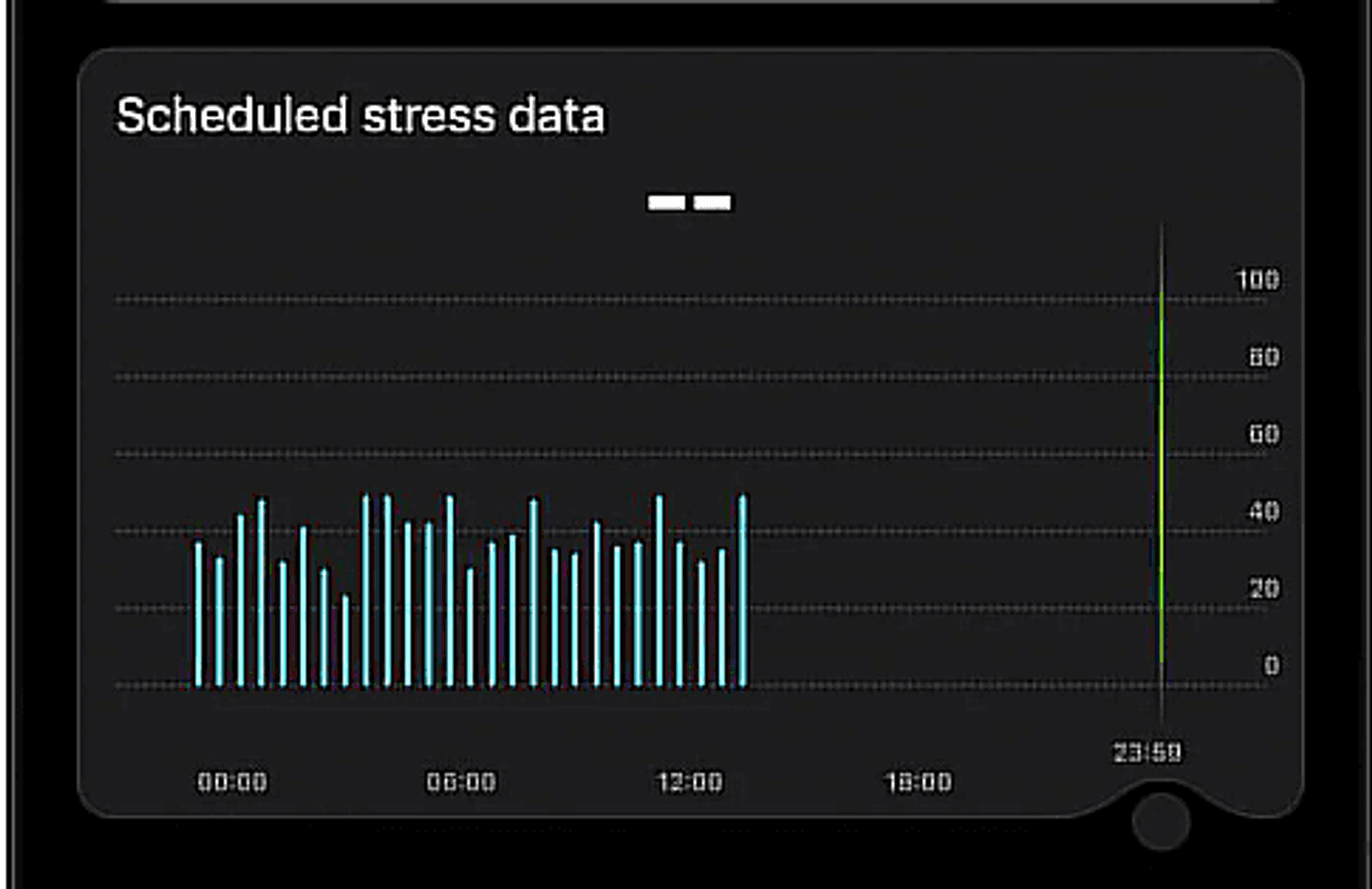
Image: HlthTrack
Behind the clean UI of stress scores on fitness devices is a surprisingly complex data pipeline.
Heart Rate Variability: The Core Signal
The biggest input is HRV (Heart Rate Variability), the variation in time between heartbeats.
High HRV → usually indicates recovery and relaxation
Low HRV → often signals physical or mental strain
Most algorithms treat HRV as a proxy for nervous system balance.
HRV=Δtbeat intervals
While that equation is simplified, the idea is straightforward: your body’s beat-to-beat timing tells a story about stress response.
Multi-Sensor Fusion
Modern devices combine multiple inputs:
Optical heart sensors (PPG)
Motion tracking (to filter activity noise)
Sleep stage analysis
Breathing rate estimation
The algorithm then runs this data through a proprietary model to generate a score, typically scaled from “rested” to “high stress.”
No two brands calculate this exactly the same way, which is why your stress score can differ dramatically between devices.
We’ve seen this clearly in devices like the HLTH Band, which uses its app ecosystem to present stress trends alongside recovery and sleep insights.
Unlike simpler trackers, it focuses more on trend interpretation rather than single-point readings, which is a smarter approach for real-world use.


Why Stress Scores on Fitness Devices Matter (and When They Don’t)
Where They Actually Help
Used properly, they can:
Flag overtraining in athletes
Help identify poor sleep recovery
Show how caffeine or alcohol impacts recovery
Highlight chronic stress patterns over time
This is where wearables become genuinely valuable as behavioral mirrors.
Where They Fall Short
However, they are far from perfect:
Emotional stress ≠ physiological stress
Algorithms vary wildly between brands
External factors (heat, dehydration, illness) can distort readings
Short-term spikes are often meaningless
In other words: don’t panic over a single high score.
For a deeper dive into recovery metrics and how they connect, see our guide on sleep tracking data interpretation: https://blog.techunboxed.co/article/sleep-tracking-explained
The Bottom Line on Stress Scores on Fitness Devices
Stress scores on fitness devices are best viewed as trend indicators, not truth detectors.
They don’t measure your thoughts. They measure your body’s response to how much physical load you're exercising.
The smartest users treat them like this:
Daily noise? Ignore it.
Weekly trends? Pay attention.
Monthly patterns? Act on them.
Devices like the HLTH Band show where this category is heading: less obsession with single numbers, more focus on long-term recovery behavior.
And that’s really the future of wearables, not telling you how stressed you are in the moment, but helping you understand how your body handles stress over time.
Because in the end, stress scores on fitness devices are only as useful as the behavior changes you make from them like how you move your body.

Sophie Bennett
Wearables & Health Tech Writer
Sophie focuses on wearables, fitness technology, and digital health trends. She enjoys breaking down complex health features into easy-to-understand insights that help readers get more value from their devices.