What is HRV and Why Should You Track It Every Morning
Health Tech
By Sophie Bennett
[Image: Unsplash]
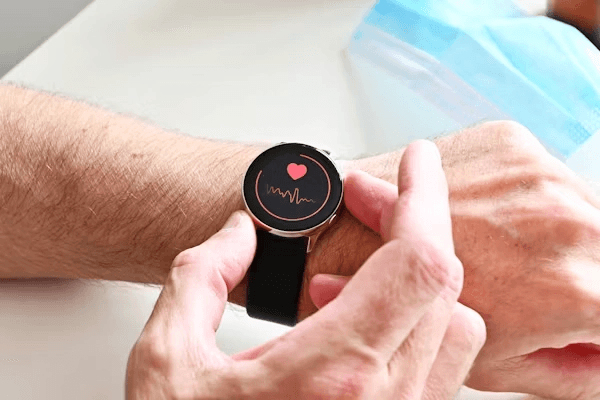
Just starting working out then suddenly you see all the stats you need to learn? Especially what HRV is? You’re not alone. It has quietly become one of the most important recovery and performance metrics in modern wearables, yet most people still either ignore or misunderstand it completely. In simple terms, HRV is less about how fast your heart beats and more about how flexibly it responds to stress, sleep, training, and recovery. And yes, it changes every single day so to track it every morning is vital.
We like metrics that actually tell you something useful, not just vanity numbers. HRV is one of the few that can genuinely help you decide whether to push hard or back off.
What is HRV (Heart Rate Variability)?

[Image: Unsplash]
HRV stands for Heart Rate Variability, which measures the variation in time between each heartbeat and not your heart rate itself.
Here’s the key misunderstanding:
A heart rate of 60 BPM doesn’t mean your heart beats like a metronome every second. In reality, the spacing between beats constantly shifts- sometimes 0.9 seconds or 1.1 seconds. That variation is HRV.
High HRV vs Low HRV
High HRV → Your body is adaptable, recovered, and resilient
Low HRV → Your body is stressed, fatigued, or under strain
Think of it as your body’s “flexibility score.” Not muscle flexibility, nervous system flexibility.
How does HRV actually work in your body?
HRV is controlled by your autonomic nervous system (ANS), which has two competing modes:
Sympathetic system → “Fight or flight” (stress, training, alertness)
Parasympathetic system → “Rest and recover” (sleep, digestion, recovery)
When these two systems are balanced, HRV tends to be higher. When stress dominates from bad sleep, heavy training, alcohol, mental strain, it leads to HRV drops.
Why morning measurements matter
Your HRV fluctuates throughout the day, but morning readings are the most useful because:
Your body is in a relatively “baseline” state after sleep
External stressors haven’t fully kicked in yet
It gives a consistent daily comparison point
This is why most wearables measure HRV during sleep or immediately after waking up.
Why should you track HRV every morning?

[Image: Unsplash]
Let’s be blunt: HRV is not a “nice-to-know” metric anymore. If you’re training, stressed, or even just trying to optimize energy levels, it’s one of the most actionable signals you can track daily.
1. It tells you how recovered you actually are
You might feel fine but still be under-recovered. HRV often exposes that gap before your body forces you to slow down.
High HRV → Green light for intense training
Low HRV → Consider recovery or light activity
2. It helps you avoid overtraining (the silent performance killer)
Overtraining doesn’t happen overnight. It builds gradually and HRV is one of the earliest warning signs.
3. It reflects lifestyle impact in real time
Alcohol, sleep quality, stress, hydration, you name it. HRV responds to all of it.
No marketing spin. No placebo effect. Just physiological feedback.


4. It improves long-term performance awareness
Athletes use it. Biohackers swear by it. Even casual fitness users benefit because it builds awareness of what actually affects your body.
HRV is powerful, but not perfect
It is indeed useful, but it’s not a magic number. No matter what smartwatch you wear
The limitations you should know
Different wearables use different algorithms
Daily HRV can fluctuate naturally without meaning “bad health”
Context matters (stress, illness, training load)
In other words: don’t obsess over single readings. Look at trends.
HRV is most powerful when you treat it like a weather forecast, not a diagnosis.
Final verdict: Should you track HRV every morning?
If you care about recovery, training performance, or simply understanding your body better, then yes, tracking HRV every morning is absolutely worth it.
It won’t replace sleep, nutrition, or common sense. But it will make those things measurable in a way most people never experience.
And that’s the real value: HRV doesn’t just tell you what your body is doing, it tells you how well you’re adapting to your life.

Sophie Bennett
Wearables & Health Tech Writer
Sophie focuses on wearables, fitness technology, and digital health trends. She enjoys breaking down complex health features into easy-to-understand insights that help readers get more value from their devices.